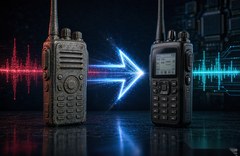
A Technical Guide for the Discerning Buyer Introduction: One Question, Two Answers Imagine two customers land on your site on the same morning. One runs a 5,000‑acre wheat farm in the Australian outback. The other manages a 30‑story hotel in downtown Singapore. Both need two‑way radios. Both ask the same question: “Which one should I buy?” If you give them the same answer, you have failed them bot...
Choosing between DMR and analog two-way radios is not simply a matter of selecting newer or older technology. For businesses, the right decision depends on communication demands, workforce size, existing radio infrastructure, operating costs, and future expansion plans. DMR radios offer digital voice processing, flexible group communication, and improved channel efficiency, while analog radios rem...
Choosing the right radio OEM supplier is about more than finding a manufacturer with competitive prices. For distributors, a reliable OEM partner must demonstrate consistent product quality, verified regulatory compliance, flexible customization, manageable minimum order quantities, stable production capacity, and dependable after-sales support. Before signing an agreement or placing a bulk order,...
Bulk purchasing two-way radios requires more than comparing unit prices. A reliable two-way radio factory should demonstrate that its products meet your communication requirements, that production quality can be maintained across the entire order, and that delivery, documentation, and after-sales support are clearly defined. Before placing a large order, evaluate the supplier through product verif...