Analog two-way radios have been widely used in commercial and industrial communication for years. They are simple to operate, relatively affordable, and suitable for basic voice communication. However, as businesses expand and communication requirements become more complex, traditional analog systems may no longer provide all the functions that modern operations need.
Upgrading from analog to DMR digital two-way radios is a practical option for businesses looking for clearer voice communication, more efficient channel utilization, and additional communication features. Digital Mobile Radio (DMR) technology can support individual calls, group communication, text messaging, and other functions depending on the radio model and system configuration.
But does upgrading to DMR mean replacing every existing radio? Can analog and digital radios work together during the transition? And how should businesses choose the right digital radio equipment?
This guide explains how to upgrade from analog to DMR digital two-way radios, covering compatibility, equipment selection, system configuration, and migration planning. It also introduces HYDX digital radio solutions for commercial users and businesses preparing to modernize their communication systems.
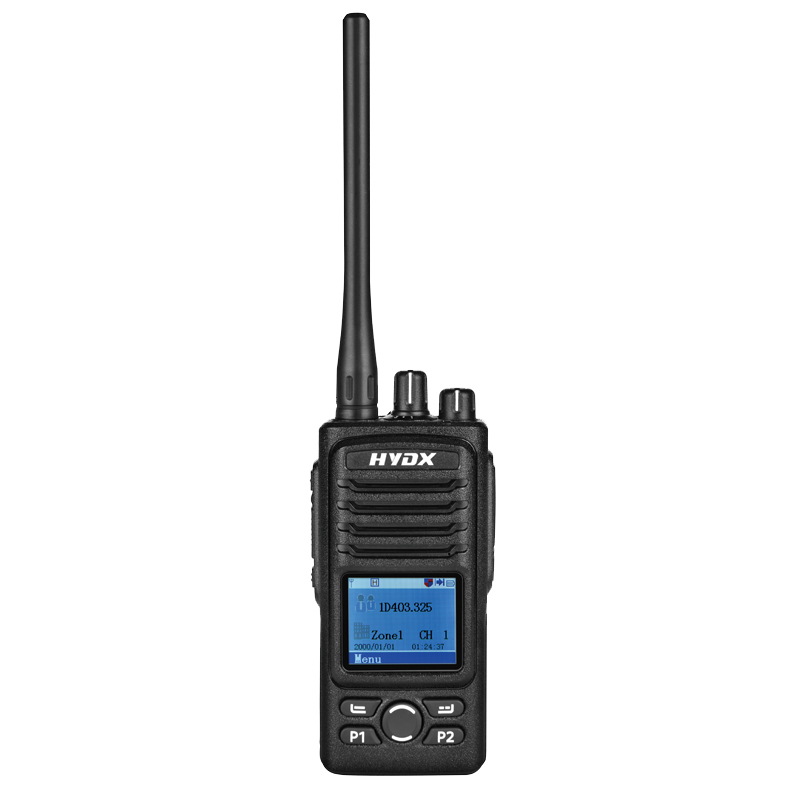
HYDX D60 digital two-way radio with a color LCD display
Analog radios remain useful for many basic communication applications. However, businesses operating across multiple departments, locations, or teams may need more flexible communication functions than traditional analog systems can provide.
DMR digital radios convert voice signals into digital data before transmission. This technology provides additional communication capabilities and uses two time slots within a 12.5 kHz channel under the DMR Tier II standard.
Several practical reasons encourage businesses to consider upgrading.
Digital radios can provide consistent voice quality within their effective coverage area. Unlike analog audio, which gradually becomes noisier as the signal weakens, digital voice maintains intelligibility until the signal approaches the receiver's decoding threshold. Beyond that point, digital audio may deteriorate rapidly.
This can be valuable in manufacturing facilities, warehouses, hotels, security operations, and other environments where employees depend on reliable voice communication.
One important advantage of DMR is its two-slot Time Division Multiple Access (TDMA) technology. It allows two separate communication paths to operate on one 12.5 kHz licensed channel, subject to the system configuration.
For organizations with several departments, this can help organize communication more efficiently without requiring a separate frequency for every conversation.
Compared with basic analog radios, many DMR models support additional functions, including:
Not every DMR radio includes all these features. Businesses should compare individual product specifications and system requirements before purchasing.
Before replacing an existing communication system, it is important to understand how analog and DMR digital radios differ in daily operation.
| Comparison | Analog Radios | DMR Digital Radios |
|---|---|---|
| Voice transmission | Analog audio signals | Digitally encoded voice |
| Audio quality | May become increasingly noisy with weaker signals | Consistent audio within the effective digital coverage area |
| Channel utilization | One voice communication path per conventional channel | Two time slots on a 12.5 kHz DMR Tier II channel |
| Communication modes | Basic voice communication | Individual, group, and all-call functions |
| Messaging | Generally requires additional equipment or systems | Supports digital text messaging on compatible models |
| Privacy features | Basic analog signaling is not encryption | Digital encryption may be available depending on the model |
| System management | Generally straightforward channel configuration | More flexible programming and digital configuration |
| Upgrade potential | Suitable for basic communication requirements | Supports more advanced communication systems |
The main difference is not simply that digital radios are newer. DMR provides a more flexible communication structure that can support growing teams and more complicated operational requirements.
For businesses that still rely on analog equipment but want to gradually introduce digital communication, dual-mode radios can be a practical transition option.
Yes, but only under the right conditions. Some DMR digital two-way radios support both analog and digital operating modes, allowing businesses to maintain communication with existing analog equipment during a gradual upgrade.
This capability is particularly useful for organizations that cannot replace all their radios at once.
For example, a company may introduce new DMR radios for supervisors and department managers while allowing employees to continue using compatible analog radios during the transition.
Important: Analog and digital radios cannot directly communicate with each other simply because they operate on the same frequency. The DMR radio must support analog mode and be programmed with compatible analog settings, including frequency, channel spacing, and CTCSS/DCS signaling where applicable.
HYDX D60 is one product worth considering for this type of migration. It supports both analog and DMR digital modes, allowing users to switch between the two communication systems.
HYDX D60 supports analog and digital DMR communication modes
According to its product specifications, the D60 supports DMR Tier I and Tier II standards, UHF 400–470 MHz operation, private/group/all calls, SMS, and digital voice encryption.
Businesses can review the HYDX D60 dual-mode DMR digital two-way radio to evaluate whether its specifications match their existing communication requirements.
A successful migration requires more than purchasing new digital radios. Businesses should first understand their existing communication setup, identify compatibility requirements, and develop a practical replacement plan.
Start by reviewing the analog radios currently used across the organization. Record their operating frequencies, channel spacing, output power, antenna types, and signaling configurations.
Also consider how employees use the existing radios. For example, determine whether communication is organized by department, whether repeaters are installed, and whether different locations share the same radio network.
This information helps identify which parts of the existing system can potentially be retained and which components need to be upgraded.
Not every business needs the same DMR functions. A small retail team may only need clearer voice communication and group calling, while a manufacturing facility may require multiple talkgroups, individual calls, emergency alerts, and repeater coverage.
Before selecting equipment, define the main requirements:
Having these requirements clearly defined makes it easier to compare different DMR models and avoid purchasing unnecessary features.
If the existing analog system is still operational, replacing every radio immediately may not be necessary. Dual-mode radios can help businesses introduce digital communication while maintaining compatibility with their existing analog workflows.
During this period, the organization can assign DMR radios to selected departments and gradually replace older analog devices as budgets and operational requirements allow.
HYDX D21Plus is another option for businesses looking for mixed analog and digital operation. Its specifications include analog/digital mixed mode, 128 channels, group and individual calls, and optional digital encryption.
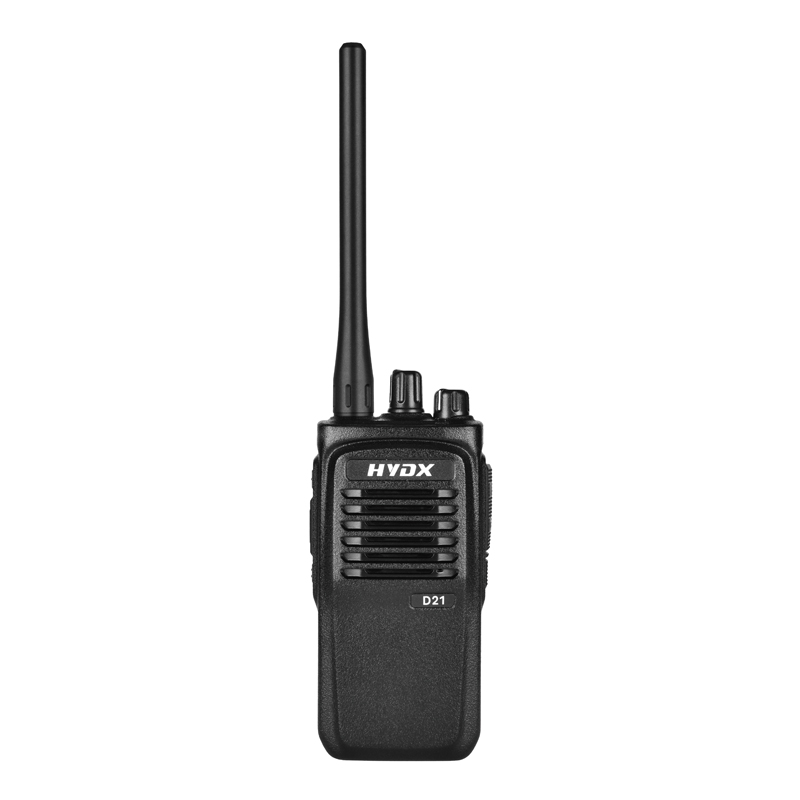
HYDX D21Plus digital two-way radio
With its mixed-mode capability, the D21Plus can be evaluated for organizations that want to move toward digital communication without immediately abandoning all existing analog practices.
Explore the HYDX D21Plus digital two-way radio for more product details and configuration options.
Unlike a basic analog system, a DMR communication network requires additional digital settings. Correct programming is essential to ensure that radios can communicate with one another.
Common configuration items include:
For example, a warehouse might configure one talkgroup for receiving staff, another for shipping employees, and a separate group for supervisors.
All radios that need to communicate must have compatible settings. Simply selecting the same frequency does not guarantee successful DMR communication.
Businesses using analog repeaters should not assume that existing infrastructure will automatically work with a new DMR system.
Before upgrading, check whether the repeater supports DMR operation, whether its frequency and channel spacing are suitable, and whether it can support the required digital configuration.
Some facilities may continue using their existing analog repeater for legacy communication while introducing a separate DMR repeater for digital users.
HYDX also provides DMR communication equipment for businesses that require repeater-based solutions. System planners should evaluate repeater compatibility and coverage requirements before deployment.
Before replacing all analog radios, test a small group of DMR devices in real working conditions.
Testing should include:
Collect feedback from employees and supervisors during the trial period. If coverage gaps or programming issues appear, they can be corrected before the system is expanded.
Choosing a suitable DMR radio depends on the required communication functions, operating environment, and budget. HYDX offers different digital radio models for commercial and professional applications.
HYDX D60 is particularly relevant for businesses planning to transition from analog to digital communication because it supports both operating modes.
Its main features include:
The dual-mode design makes it a useful candidate for mixed analog and digital environments, provided the frequency and programming settings are compatible with the existing system.
The HYDX D21Plus is designed for professional communication applications where users may need additional digital functions.
Its listed specifications include:
For organizations that require more flexible communication management and optional security functions, the D21Plus is worth comparing with other professional DMR models.
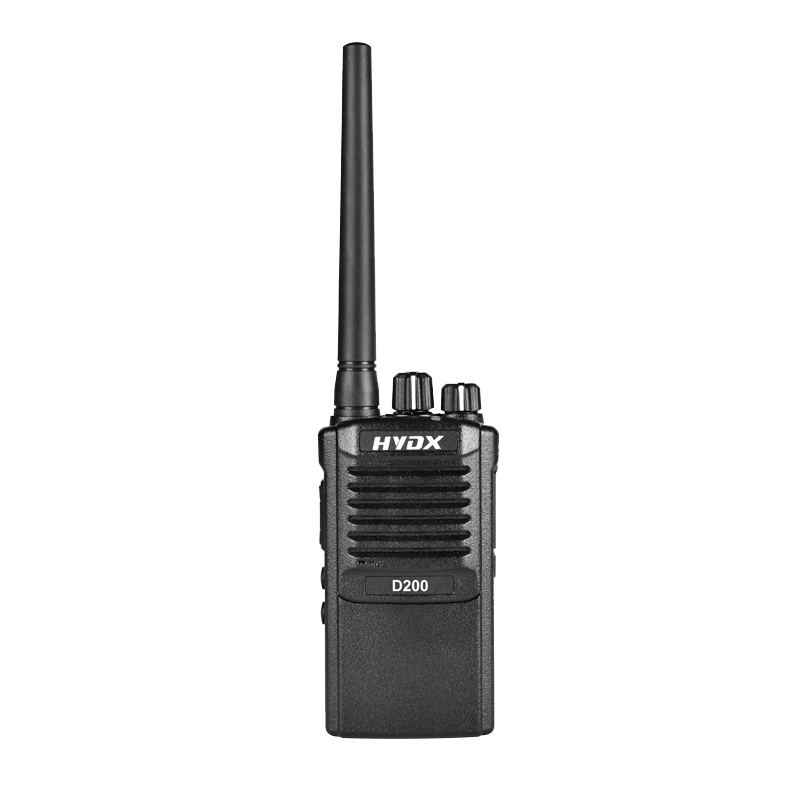
HYDX D200 is a commercial digital two-way radio designed for users who need organized communication across multiple teams.
Its specifications include 32 channels, 1024 digital contacts, private/group/all calls, SMS, scanning, and repeater support.
The D200 can be evaluated for commercial environments that are ready to adopt DMR communication as their primary radio system.
Learn more about the HYDX D200 commercial DMR handheld radio and its available functions.
Businesses can also compare additional models in the HYDX DMR digital two-way radio product category to find equipment that matches their communication requirements.
The cost of upgrading from analog to DMR digital radios depends on the number of devices, selected radio models, accessories, infrastructure, and programming requirements.
Replacing handheld radios is only one part of the total investment. Businesses should also consider whether they need new repeaters, antennas, chargers, batteries, programming services, or additional system configuration.
| Cost Component | What to Consider |
|---|---|
| DMR handheld radios | Model, output power, channel capacity, and required functions |
| Repeaters | Whether existing infrastructure supports DMR operation |
| Accessories | Chargers, batteries, antennas, earpieces, and microphones |
| Programming | Frequency configuration, radio IDs, color codes, and talkgroups |
| Installation | Repeater setup, antenna installation, and coverage testing |
| Training | Employee training and communication procedures |
For smaller organizations, a phased upgrade can help spread investment over time. Larger businesses may prefer a complete system replacement to standardize communication across departments and locations.
The best approach is to request a quotation based on the actual number of radios, required functions, and infrastructure conditions rather than comparing handheld radio prices alone.
Although DMR technology offers several advantages, an upgrade can create communication problems if the migration is not properly planned.
Here are some common mistakes businesses should avoid:
A well-planned migration helps reduce communication interruptions and makes it easier for employees to adapt to the new system.
When selecting a digital radio supplier, businesses should look beyond individual product specifications. Manufacturing experience, product consistency, technical support, and customization capabilities are also important considerations.
HYDX is a professional wireless communication brand under Fujian Juston Electronic Equipment Co., Ltd. Established in 2011, the company provides handheld communication equipment and digital radio solutions for commercial, industrial, and professional users.
HYDX offers several advantages for businesses evaluating analog-to-digital communication upgrades:
For distributors, system integrators, and organizations planning a radio system upgrade, HYDX can be a product supplier to consider when comparing DMR equipment and customization requirements.
Visit the HYDX official website to explore available communication products and discuss your digital radio requirements.
Upgrading from analog to DMR digital two-way radios is not simply about replacing older equipment. It is an opportunity to improve communication management, make better use of available radio channels, and introduce functions that support more demanding business operations.
For organizations that want to retain existing analog communication during the transition, dual-mode radios can provide a practical migration path. Models such as the HYDX D60 and D21Plus support analog and digital operation, while the D200 offers commercial DMR communication functions for businesses adopting digital systems.
Before making a purchasing decision, evaluate existing frequencies, equipment compatibility, repeater infrastructure, employee requirements, and total upgrade costs. With proper planning and suitable equipment, businesses can move toward a more flexible and efficient digital communication system.
Analog radios transmit voice as continuous analog signals, while DMR radios convert voice into digital data. DMR supports additional functions such as individual calls, group calls, digital messaging, and two-slot TDMA communication on a 12.5 kHz channel.
Yes, if the new DMR radios support analog mode and are configured with compatible frequencies, channel spacing, and analog signaling settings. A dual-mode radio can help businesses maintain communication with existing analog equipment during a gradual upgrade.
No. Businesses can upgrade gradually by introducing dual-mode DMR radios first and replacing older analog devices over time. However, all radios that need to communicate must support compatible operating modes and settings.
Key benefits include more consistent voice quality within the digital coverage area, two-slot channel utilization, individual and group calling, digital messaging, and optional encryption or GPS functions on supported models.
In some cases, yes. DMR radios may operate within the same licensed frequency allocation as existing analog radios if the equipment supports the required frequency range and the digital channel configuration complies with local regulations. Sharing a frequency does not automatically make analog and digital communication interoperable.
Not necessarily. An analog repeater does not automatically support DMR digital communication. Businesses should check whether the repeater supports DMR or consider installing a compatible digital repeater.
A dual-mode DMR radio supports both analog and digital communication. It allows users to switch between operating modes and can be useful when businesses need to maintain communication with older analog radios while introducing digital equipment.
HYDX D60 and D21Plus are worth considering because their specifications include analog and digital operating modes. HYDX D200 is another option for commercial users looking for DMR digital communication functions. The final choice depends on frequency compatibility, required features, and system configuration.
The cost depends on the number of radios, selected models, accessories, repeater requirements, programming, installation, and training. Businesses should request a quotation based on their actual communication requirements and existing infrastructure.
The migration period depends on the number of radios, system complexity, repeater installation, and testing requirements. A small organization may complete a basic upgrade relatively quickly, while larger multi-site operations may need a phased deployment and testing plan.

SUBSCRIBE TO JUSTON E-NEWSLETTER :
Tel : +86 15906081133
Email : seven@odmradio.com
Whatsapp / Wechat : +86 15906081133
No.886 Changfeng Street, Licheng District, Quanzhou,Fujian,China


SCAN IT HYDX WECHAT :