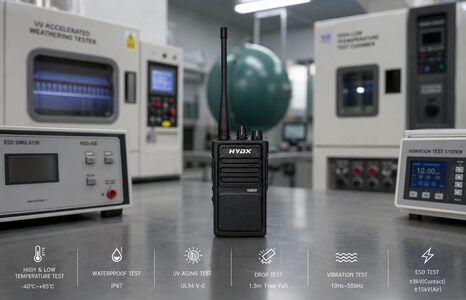


To ensure communication reliability, operational safety, and environmental durability in industrial, emergency, and outdoor scenarios, every digital mobile radio must undergo a rigorous series of factory tests. These procedures comply with national standards such as GB/T 15844-2022 and GB/T 32659-2016, and for export models, international standards including FCC and CE.Only units that pass all tes...
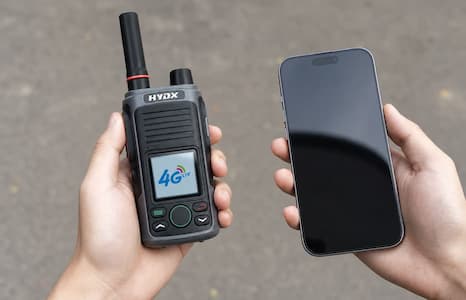
In the world of professional two-way communication, businesses and organizations face a key decision: Public Network Radio (4G PoC) or Private Network Radio (Traditional LMR like DMR, TETRA, etc.)? Both technologies serve push-to-talk (PTT) needs but differ significantly in architecture, cost, coverage, and reliability. Here’s a clear, balanced comparison to help you choose the right solution for ...
Two-way radios remain essential communication tools across security, construction, hospitality, event management, and outdoor recreation. While modern handsets are engineered for durability, their real-world longevity depends heavily on how they are maintained. A comprehensive maintenance strategy extends beyond basic battery care and periodic cleaning. This article outlines six foundational princ...
When selecting communication equipment for industrial operations, emergency response, or remote work, the “safety” question involves not only personal RF exposure but also communication reliability under real-world conditions. This comparison examines two-way radios (walkie-talkies) and cellular phones across critical safety dimensions. RF Exposure Safety: Walkie-Talkies Generally Show Lower Absor...
Many commercial and industrial walkie talkie users face a common issue: walkie talkie keeps cutting out. Intermittent audio, sudden signal drops, and broken transmissions severely hinder teamwork in construction, hospitality, security, and outdoor operations. As a professional walkie talkie manufacturer, we summarize the core causes and practical fixes to help you achieve stable, uninterrupted two...