press center

News

  • Amateur Radio students make contact with NASA astronauts
    Amateur Radio students make contact with NASA astronauts November 02, 2022
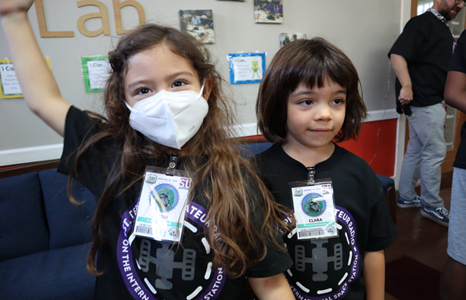
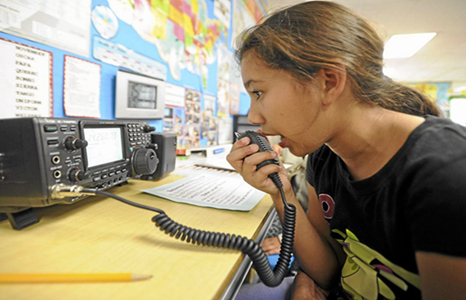
    As the students of St. Stephen’s Episcopal School in Houston gathered in a classroom one morning this fall, they eagerly awaited the chance to ask an astronaut their special question. Through Amateur Radio on the International Space Station, the program that connects students to astronauts, 10 children who are in kindergarten through eighth grade were able to make radio contact with NASA astronaut Bob Hines by a high-gain Yagi antenna built by St. Stephen’s teacher Charlie Larrabee. The questions ranged from inquiring how cold the station was to if the astronauts can eat ramen in space, with one child even asking if it feels cool to do a backflip in space. The answer? Yes, it does. Such a monumental event takes lots of planning, according to Larrabee, with the preparation for the day taking almost a year to complete. In that time, the students learned about radio and space technology. Unlike most other participating schools, Larrabee decided to build the antenna from scratch by himself. Once it was built, it lived on the roof above the classroom. Due to the nature of how the space station orbits through space, the students only had 10 minutes to ask their questions. “It just felt like the impact of the event would be much more meaningful,” Larrabee said. “I was actually controlling the walkie-talkie with my knee. So when I push my knee down on the pedal, that's what starts the walkie-talkie transmitting and the kids can start talking. We're kind of collaborating.”
    View details
  • Young amateur radio operator selected for expedition to Antarctica
    Young amateur radio operator selected for expedition to Antarctica October 27, 2022
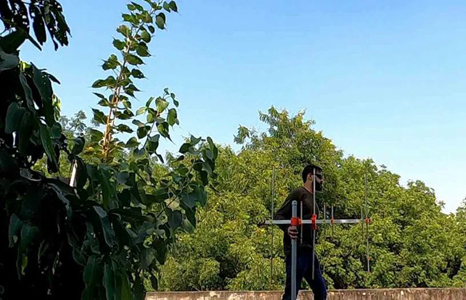
    With a call sign of VU2CUW, 27-year-old amateur radio operator Sarabjeet Singh Chhabra will be in Antarctica as a member of the Indian Scientific Expedition to Antarctica (42-ISEA) on December 9. He will be accompanying the team to either Bharati or Maitri Stations in the white continent. Sarabjeet, who got his ham radio operating license in 2015, will be one of the youngest members of the contingent and he is feeling happy and nervous at the same time as it is his first international trip ever. He landed the opportunity while chatting with a customer, Bhagwati Prasad Semwal at his start-up Hobbytivity. Bhagwati is also a radio operator (call sign VU3BPZ) and has already been on this expedition to Antarctica. Sarabjeet also credits his father, an ex-serviceman and amateur radio operator (VU2CRS), for being his guiding light throughout his technical journey. Two teams – research and logistics –will be a part of the expedition. “I will be in the logistics team; we are basically the support system to the research team. There are two radio operators on the team and I’ve opted to be posted at the Bharati Station but the posting has been kept a surprise. I will be needed to take care of the VHF communication as there is no cell coverage in Antarctica and everything has to communicate via VHF radios that are basically handheld radios,” he says. Sarabjeet is also excited about conducting his own experiments in his leisure time and is taking HF radios, VHF radios, and other personal equipment along with him. He has a Kenwood dual band radio and it has capabilities of sending emails over the radio. “I would like to work on the propagation of high frequencies from Antarctica to India, and other stations in my proximity. I am not sure of the success because the ham radio hobby is all about experimentation,” shares Sarabjeet who has applied for a new call sign ‘AT42I’ for this expedition.
    View details
  • Cambridge Scouts connect to youth around the world through ham radio
    Cambridge Scouts connect to youth around the world through ham radio October 18, 2022
    The Cambridge Amateur Radio Club and Cambridge Scout Troop participated in the annual Jamboree at Churchill Park. Local cubs, beavers and scouts were able to communicate with other like-minded youth around the world. Through modes such as slow scan TV, DMR radios, D-Star, UHF walkie talkies, participants could contact peers up to 4,000 kilometre away. “The Cambridge Amateur Radio Club allows the kids to operate the radios to talk to other kids,” Lantz said.“We could reach Europe and the United States. There’s also a Jamboree on the Internet that we run on laptops via online chat.” Knowing about ham radio, also known as amateur radio, Lantz has wanted to bring it to the community and share it with the local scout group. More than just a fun exercise, Lantz hopes the kids take the opportunity to learn about the various technologies available to them. He points out that they never know when the skill may come in handy. “This could line up with a job opportunity. If you’re an environmental scientist, let's say, having your ham license will allow you to work a remote station via ham radio. It’s one more thing to add to your resume.” Being able to see the kids experience something new and unique made the whole day worth it for Lantz and the other organizers. “Just seeing the kids being able to reach out and talk to other kids around the world is my favourite part,” he said.
    View details
  • China Police and Solomon Island Police conducted a Joint Mock Exercise of VHF Communication
    China Police and Solomon Island Police conducted a Joint Mock Exercise of VHF Communication October 13, 2022
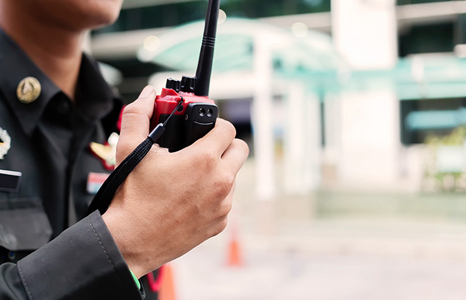
    China Police Liaison Team (CPLT) and Royal Solomon Island Police Force (RSIPF) conducted a Joint Mock Exercise of Digital Very High Frequency(VHF)Communication System. The officers simulated the use of VHF handheld radios and long distance radios in three scenarios: routine communication, emergency contact and point-to-point call, after receiving training from CPLT at the Rove Police Headquarters. Karen on behalf of the Solomon Island (SI) Government and MPNSCS thanked the Ministry of Public Security of China for the timely and effective support to RSIPF in terms of this major cooperation. Ms Karen was impressed by the new development we have in terms of enhancing capability of RSIPF. "Communication is an important part of policing. Over the years, we have tried to resource communication capability within RSIPF, but we are slow and struggling. With the assistance of CPLT led by Commissioner Zhang, it’s really another step forward to modernize the capability we really need." CPLT Team Leader, Commissioner Zhang said today’s brief and mock exercise is of significant importance for RSIPF because it marks the application of a new communication system, the digital VHF communication system which was assisted by the Ministry of Public Security of China.” The system can be used by different departments of the RSIPF and police stations as it will enable police officers to communicate efficiently and effectively during their daily work and important operations. It is also a strong support for the command and control of the security of Pacific Games 2023. The RSIPF officers are now familiar with the new communication system after the training and mock exercise. RSIPF officers expressed their gratitude to the CPLT and PRC engineers for the knowledge and skills taught to them.
    View details
  • The use of PoC devices on the bus
    The use of PoC devices on the bus October 07, 2022
    Aussie telco Vertel and NSW-based two-way radio specialists Combined Communication have teamed up to install Push-to-Talk over Cellular (PoC) devices across Dyson Group’s 650 buses and coaches. The devices come with covert push-to-video duress features to improve safety for Dyson’s drivers, many of which operate in remote areas of NSW and Victoria that are not effectively supported by mobile service or traditional radio communications. The company’s 1,300 staff previously relied on a hodgepodge of different communications systems that had been inherited from its acquisitions.  The privately-listed, carrier and its premium channel partner Combined Communications deployed a platform that includes both the features of traditional two-way radio and the data functionality of smartphones, including underlying GPS tracking capabilities.  The device looks like a traditional two-way radio and is attached to the driver’s dashboard with double-sided, heat-activated 3M tape.  It also features a built-in camera and a covert push-to-video duress feature that lets Dyson Group’s drivers alert head office to an incident while generating real-time video footage without alerting perpetrators. Vertel commercial director Tony Hudson said, “The Vertel PoC solution helps keep mobile workforces safe, in touch, and productive, and is ideal for life- and mission-critical applications.” “Driver safety is of the utmost importance to Dyson Group and the Vertel PoC solution with built-in covert duress features was especially customised to meet the company’s unique requirements in ensuring driver safety while not alerting potential perpetrators and giving dispatchers and emergency services real-time vision of what is happening on the bus.” “Without reliable communication, our drivers could be put at risk in regional areas without being able to communicate their location or request assistance in the event of an incident or emergency.” 
    View details
  • Attracting new generation of kids to amateur radio
    Attracting new generation of kids to amateur radio September 28, 2022
    An small team of EURAO members from Romania, with the financial support of a local foundation in Buzau City that started in April a program dedicated to the children and young people in order to experience applied science with the help of amateur radio. The project aims to create an educational space and apply in practice the phenomena that accompany the interaction between people using radio waves. The program, which began in April, is scheduled to last until November 2022, when we will be able to offer a more exhaustive report of the activities carried out. So far, during the summer holidays, more than 5000 children have attended demonstrations of what amateur radio means. The program Radio Science 2.0 assumes an educational role to help kids to understand a lot of things regarding to the life and how we can use the ham radio to keep away the virtual life of them. The initiative was welcomed by the parents too. The team of Radio Science 2.0 started to make basic activities to bring up kids interests to the practical things direction, ease to do for them and full of knowledge and science. In this manner we started to teach them the phonetic alphabet, about how is working Frs walkie talkie, how we can find directions on the ground to toward our antennas, what a transceiver is and other elementary things from ham radio biology and emergency situation domains. We continued to teach them about how to solder and during the meetings they made their first FM radio. We did a lot of long range communication with radios and had lots of fun and a lot of knowledge we finally gatheried! Anyway, we discovered the kids are attracted by the ham radio just if we can proof the necessity of it and for this new situation two hours became three or four hours of workshops every weekend. Actually, the kids didn't want to go home after the educational time was spent. We did a lot of work for the wonderful kids. Our scope to show them what means ham radio for more than 5000 kids during the summer vacation was easy touch and now we have invitation to continue the activities as long as we want and can. As the result of our activities we received an invitation to participate in the summer school, for three months long, organized by Cultural and Educational Center Alexandru Marghiloman in each Thursday of the week.We recorded a lot of testimonials and also an interesting conclusion: how we can improve the ham radio with the new generation!
    View details
  • Amateur radio makes the connection to save lives
    Amateur radio makes the connection to save lives September 21, 2022
    The following two rescue stories are great examples of why amateur radio is important. The first story occurred in Wisconsin and is told by ARRL member Scott Strecker, KG9IV. In his own words, Strecker shares how he was able to help a ham in distress. Thanks to the Chippewa Valley Amateur Radio Club in Wisconsin, an ARRL Affiliated Club, for this information. "It was Friday, which meant I worked from my home office. I have the VHF radios on low to monitor them in the background. Recently, I got into the Allstar node with a hotspot. I use it to monitor the FM38 systems. At about 7:45 AM, I heard the Allstar node come up. An individual in distress was asking for assistance to get an ambulance to him. It was a ham in Brown Deer, Wisconsin. He had slipped on his bathroom floor and went down so hard he could not get up, but he happened to have his handheld with him. He did not have access to the phone, and he lived alone. I called the Brown Deer police call center. The dispatcher got the fire department rolling and then started asking me for more details. I had the dispatcher on speaker phone, and he could hear the hams' responses to the questions. It felt good to help out. I also realized it was due to my monitoring that I was able to hear his call. In addition to Strecker's story, newly licensed amateur radio operators Shannon Vore, KK7GVG, also shared a rescue story. On September 13, 2022, in the Rocky Mountains in northwest Idaho, they were out for a weekend of four-wheeling in their Jeep. The area is an extremely mountainous region with no towns, very few people, no facilities, and no cell phone coverage. The nearest airfield is Horse Haven Trail, an unimproved dirt strip that's severely eroded and covered with rocks and debris. At about 4:30 PM, Vore and Bouchard were taking a break when an approaching truck notified them of an ATV accident involving two teenage girls. The accident scene was just a few miles away, and when they arrived it was clear the teenagers were critically injured. Bouchard was unable to contact several local repeaters, but was finally able to make contact using a simplex frequency (146.420 MHz) that's popular with the hams in Coeur d'Alene, 20 miles from the accident site. For nearly 2 hours, Vore and Tappero provided relay between the 911 dispatcher, advising the condition of the injured and the approaching weather. Life Flight Network was unable to respond because of a severe thunderstorm immediately over the rescue site. Tappero continued to provide relay information for all parties until 6:00 PM, when the EMT's arrived. The teenagers were in stable condition and immediately transported to the nearest hospital. Today, they're in good condition and recovering. "It took us about 2 days to wind down from the experience," said Vore. "We are both glad we had our amateur radio licenses and were able to help." Bouchard said that they had been using radios on the General Mobile Radio System (GMRS), but have since upgraded their...
    View details

  • Chinese ham successfully copied the APRS beacon of ISS
    Chinese ham successfully copied the APRS beacon of ISS September 08, 2022
    The International Space Station ("ISS" for short) passed over the city of Guilin, Guangxi, at 9:27 a.m. The city's radio amateur (call sign: BG7SRC) successfully copied the APRS beacon (frequency 145.825Mhz) transmitted by the ISS. The Automatic Packet Report System (APRS) is a project in the amateur radio, which combines the amateur radio and the Global Positioning Satellite System (GPS) to achieve the purpose of real-time position transmission in the AFSK AX.25 communication mode. APRS receiving stations around the world can connect to the Internet to upload the APRS packet information received by the station to the APRS server, and finally compile the data for users to read. There is an APRS Digipeater in the amateur radio module of the International Space Station, which uses a frequency of 145.825Mhz (the VHF band amateur satellite frequency is 145.800-146.00Mhz). It can be used for APRS operations, not only to send location, but also to transmit text messages. Frequency information can be attached to APRS messages, making it easy for other hams to find out what frequencies you are using. Some hams plug their personal weather information (not weather forecasts) into the APRS system to provide real-time information on precipitation, wind, etc. There is also the short message protocol using APRS, in the case of being disconnected from the Internet, in emergency communication, the advantages of information release and location sharing APRS are much greater than voice communication. APRS can not only interact with stations on the ground, but also conduct satellite communication.
    View details
  • BARC operator connect the world in new era
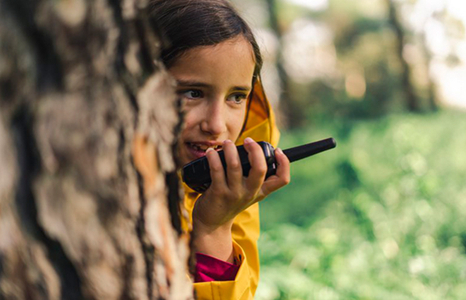
    BARC operator connect the world in new era September 01, 2022
    Ham radio is all about connections. Club members right here in Burlington connect to other operators all over the world and even to astronauts in the International Space Station. The technology, which continues to inspire a passionate group of users, has managed to remain relevant even in the era of email and cellphones due to its reliability. “When all else fails, ham radio doesn't, and we saw that just recently in this Rogers thing. What am I going to do? I haven't got a telephone. How am I going to talk? Well, ham radio people were still talking to each other,” said Tom Montgomery, a member of the Burlington Amateur Radio Club (BARC). Club member Yves Isabelle, who lives in Burlington, said he has made use of his radio on the other side of the world. “Just before COVID, like the month before we went into lockdown, my wife and I were travelling. We're in Australia, New Zealand. I had my little handheld radio with me. I was able to use handheld radio connect up to a repeater there that was connected to the internet, and I had a conversation with four guys from the club here in Burlington, from Sydney, Australia,” said Yves. BARC members say there’s a lot of different reasons to get into the hobby. Some people like tinkering with machines, while others like talking to people around the world. The group also supports local emergency services by providing equipment and expertise when called upon. Of course,NOAA(emergency weather)radios are being touted as a new tool for alerts and warnings during disasters. “As much as it sounds complicated, it's not. In this hobby, YouTube is your friend. There's always somebody who's done it from scratch and done it right. Everybody uses it — the technology keeps changing,” said Yves.
    View details

  • Northland man who breached Radiocommunications Act faces fine of up to $30K
    Northland man who breached Radiocommunications Act faces fine of up to $30K August 25, 2022
    Authorities trying to curb the flow of illegally obtained two-way radio devices have charged a Northland man with importing them without a licence. The man, who has interim name suppression, recently appeared in Whangārei District Court, pleading guilty to breaching the Radio Communications Act 1989 by importing the devices without a licence. Scheduled for sentence later this year, he faces a fine of up to $30,000. The charge is related to a consignment of 50 dual band radios and 2 long range radios, which was addressed to the man's home and intercepted by Customs at Auckland airport on December 23 last year. A summary of facts released by the Ministry of Business, Innovation and Employment's Radio Spectrum Management (RSM) unit, said the illegal supply of these two-way radios had become a serious problem for police in the Northland region. The RSM is the authority that allocates rights for the use of the radio spectrum, enforces compliance with licensing requirements, and administers the Radio Communications Act 1989 and the Radiocommunications Regulations 2001. Records were not available to determine how many of the radios he sold through Facebook. On January 21 last year, RSM saw a photo he posted on his North Comms page showing 47 of the devices for sale. It indicated he had likely sold a significant volume, RSM said. At that stage, RSM was unable to link the profile to the man.By December 7 last year, RSM became aware he had resumed listing two-way radios on Trade Me. He was issued an infringement notice and told to take the corrective actions stipulated by the Act but he failed to do either. Interim suppression was imposed on the basis that publicity could cause the man extreme hardship, including by affecting his current job search.
    View details

1 ... 5 6 7 8 9 10

A total of 10 pages

Leave A Message

Leave A Message
If you are interested in our products and want to know more details,please leave a message here,we will reply you as soon as we can.

Home

Products

whatsapp