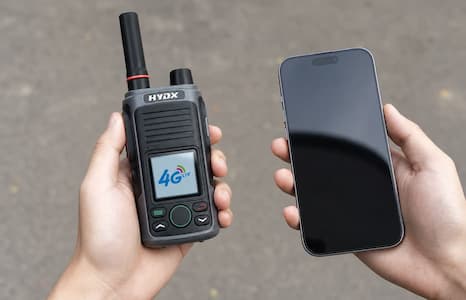


When selecting communication equipment for industrial operations, emergency response, or remote work, the “safety” question involves not only personal RF exposure but also communication reliability under real-world conditions. This comparison examines two-way radios (walkie-talkies) and cellular phones across critical safety dimensions. RF Exposure Safety: Walkie-Talkies Generally Show Lower Absor...
Many commercial and industrial walkie talkie users face a common issue: walkie talkie keeps cutting out. Intermittent audio, sudden signal drops, and broken transmissions severely hinder teamwork in construction, hospitality, security, and outdoor operations. As a professional walkie talkie manufacturer, we summarize the core causes and practical fixes to help you achieve stable, uninterrupted two...
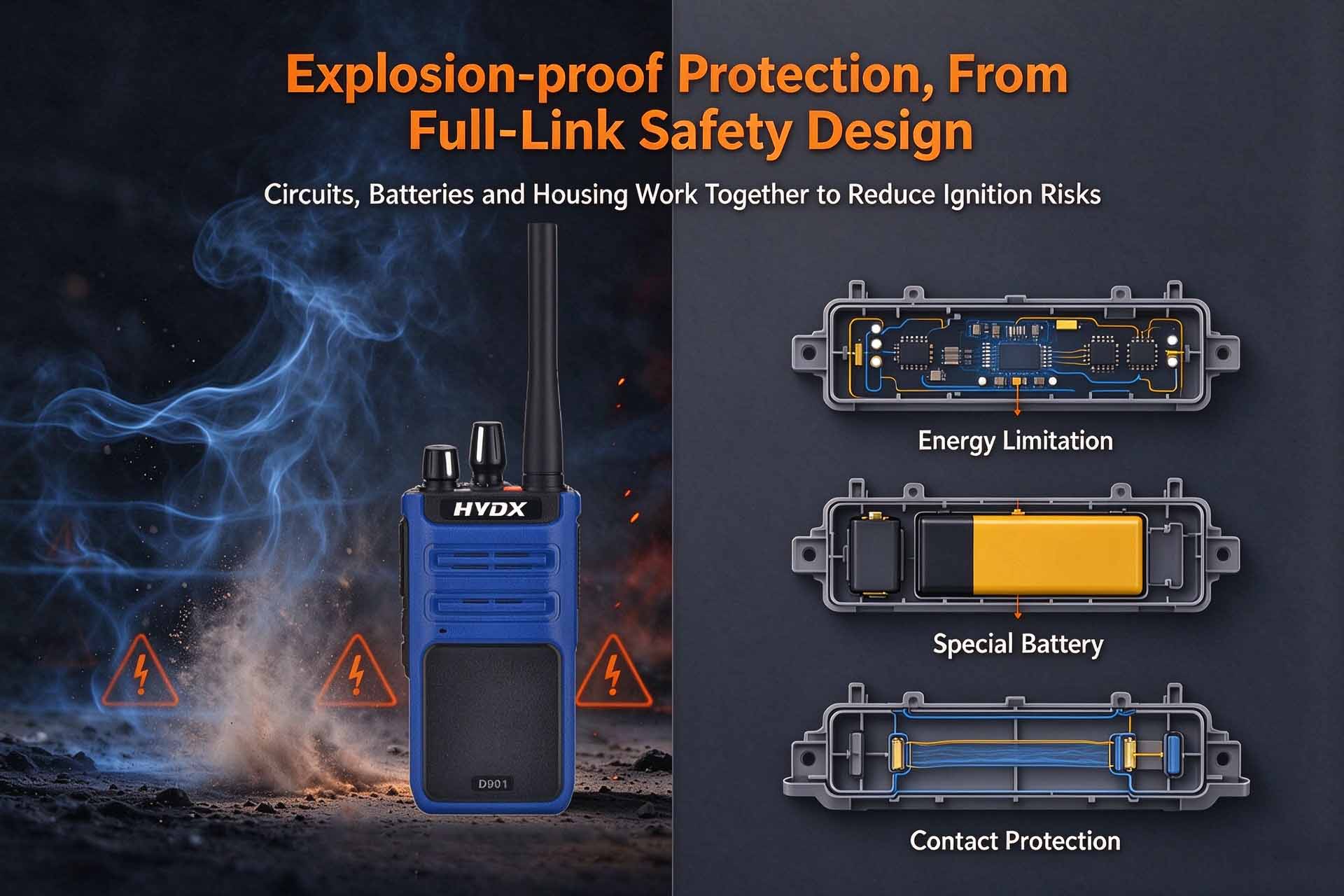
Everyone has this question: They look similar on the outside, the price difference is obvious, so what’s really the difference between explosion-proof walkie-talkies and ordinary walkie-talkies? Choosing the wrong one in high-risk scenarios could bury a hidden explosion safety hazard. 1. Fundamental Difference: Could it become an ignition source? Ordinary walkie-talkies are not designed with energ...
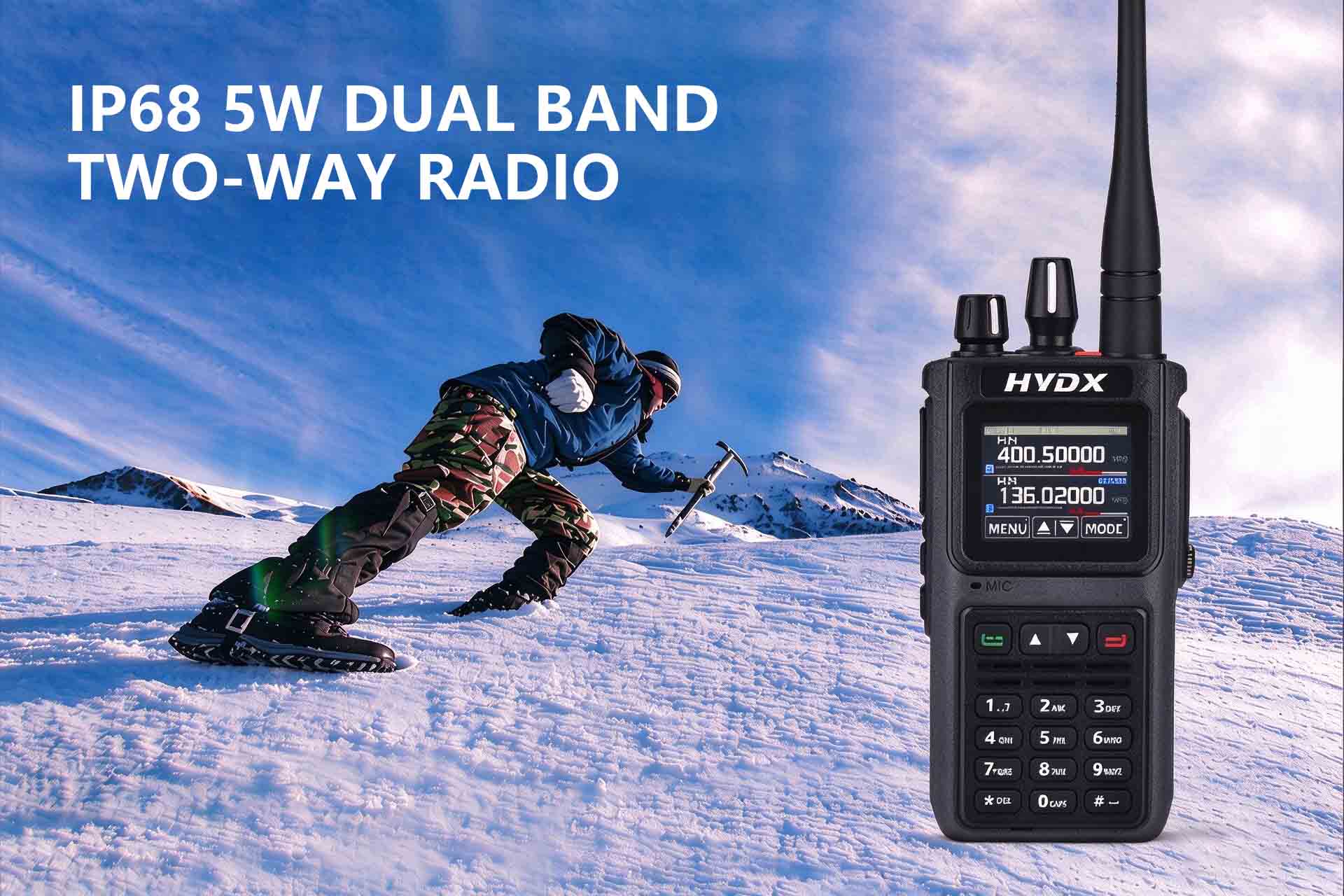
HYDX-A910 5W Professional Dual-Band Handheld Walkie-Talkie, IP68 Dustproof and Waterproof, with integrated aviation reception, digital anti-crack, recording, emergency alert, and other rich features. Whether it's for commercial dispatch at construction sites and ports, or outdoor team activities and amateur radio use, it provides continuous, clear, and secure private network communication even in ...
Choosing the right radio OEM supplier is about more than finding a manufacturer with competitive prices. For distributors, a reliable OEM partner must demonstrate consistent product quality, verified regulatory compliance, flexible customization, manageable minimum order quantities, stable production capacity, and dependable after-sales support. Before signing an agreement or placing a bulk order,...
When choosing walkie-talkies, selecting between UHF and VHF bands is a key consideration for many buyers and on-site operators. Neither band is absolutely better than the other; they have significantly different signal propagation characteristics. Only by matching the band to the actual working scenario can you ensure stable and reliable communication and avoid issues like weak signals or communic...
Private label two-way radios allow distributors to sell communication equipment under their own brand without developing an entire radio platform from the beginning. The process typically involves selecting a suitable radio model, agreeing on branding and packaging, verifying technical and regulatory requirements, and approving samples before bulk production. For radio distributors, a successful p...