Quick Answer
USB‑C frees you from bulky proprietary cradles – you can charge anywhere with your phone charger or a power bank. That’s a game‑changer for individuals and small teams. But if you manage a fleet of dozens of radios, multi‑bay cradles still win for overnight charging and battery maintenance. 80% of users should go USB‑C without hesitation; fleet managers, decide based on your scale.
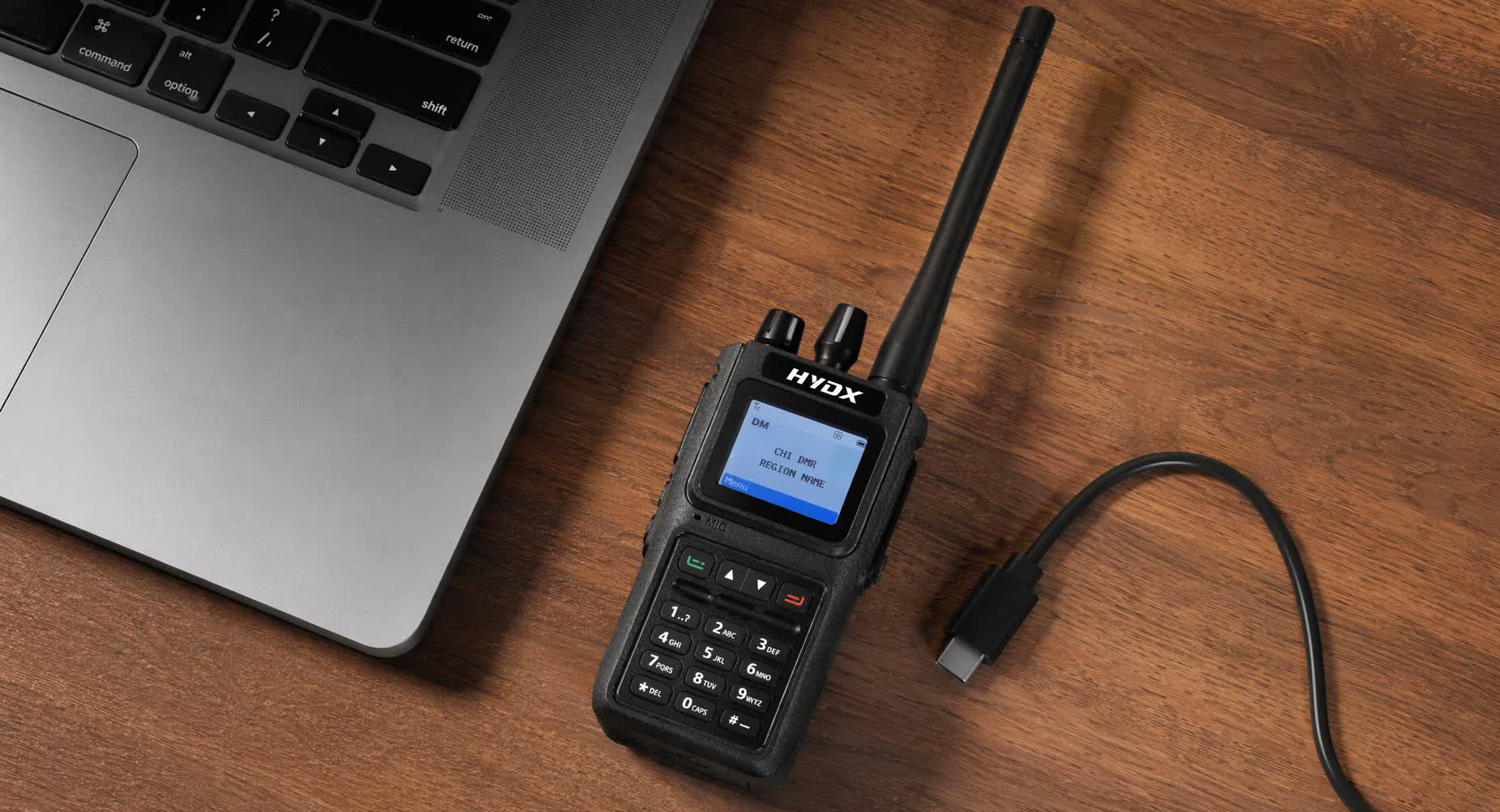 Key Takeaways
-
One charger for everything – Phone, laptop, radio – one cable, no more brick‑hauling on trips.
-
Kill the “low battery” anxiety – Out in the wild? Use a power bank, car lighter socket, or even a solar panel to top up.
-
Real savings – Lose your cable? Replace it for a few bucks, not $50+ for a discontinued proprietary cradle.
-
Fast charging is standard – USB‑C Power Delivery (PD) can charge twice as fast as old‑school cradles.
-
Durability isn’t an issue – With a dust cover and a solid IP rating, USB‑C ports are tougher than you think.
The Cradle’s Downfall – What’s Wrong with It?
For decades, cradles were the norm – drop the radio in, hear the click, and it charges. Simple. But they come with crippling drawbacks:
-
Zero flexibility – Lose or break your cradle? You need an exact replacement, often expensive and hard to find.
-
Indoor only – Cradles need a wall socket. They’re useless in the field, in a car, or on a construction site.
-
Slow as molasses – Most older cradles top out at 5W, while USB‑C PD delivers 18W‑30W easily.
USB‑C’s Superpowers – 5 Core Advantages
1. Ultimate Universality
This is the killer feature. Android, iPhone, laptop – if it has USB‑C, it just works. You don’t need a dedicated outlet just for your radio.
2. True Field Freedom
This changes everything. Heading into the mountains? A 20,000mAh power bank gives you 5‑8 full recharges. In a car? Plug into the 12V port. At a café? Borrow a USB‑C charger. Even public power banks can save you.
3. Long‑Term Cost Savings
Look beyond the purchase price – think total cost of ownership:
Lost a USB‑C cable? That’s $2‑5.
Lost a cradle? That’s $50‑150 – if you can still find one.
With the EU’s USB‑C mandate, buying a cradle‑based radio today means buying into a dying ecosystem.
4. Blazing Fast Charging
In a hurry? Plug into a PD‑compatible charger and get a significant boost in the time it takes to make coffee. The cradle is still blinking red.
5. No More “Borrowing” Headaches
At the office, hotel, or even from a colleague – everyone has a USB‑C cable. You’ll never be stuck without a way to charge.
The Cradle’s Only Last Stand – Fleet Management
Despite USB‑C’s versatility, cradles still shine in one scenario: multi‑bay charging racks for large warehouses, security teams, or construction sites.
Efficiency – One power cord charges 10‑20 radios overnight, with no cable mess.
Battery care – High‑end racks offer trickle charging and diagnostic features that extend expensive battery life.
Bottom line: If you manage 10+ radios, invest in a multi‑bay cradle. For everyone else, USB‑C is the clear winner.
Durability – The Elephant in the Room
Many worry that USB‑C ports are too fragile for construction sites or outdoor use.
Reality check: Professional USB‑C radios have recessed ports with tight rubber dust covers (IP54/IP67 or higher). They’re rated for 10,000+ insertion cycles – that’s 5‑10 years of daily use. And if a cable does wear out, replacing it costs pocket change – not a fortune.
The Verdict – Don’t Be a Luddite
Unless you’re a fleet manager with dozens of radios, stop buying radios that still use old‑school cradles.
Future‑proof – Within 3‑5 years, USB‑C will be the default; cradles will become relics.
Massive upgrade – From “hunting for a wall socket” to “plugging into a power bank anywhere” – it’s a leap you’ll never want to reverse.
The industry is moving. Don’t get left behind.
FAQ
Q: Can I charge my radio with my phone’s USB‑C charger?
A: Yes, you can – but to protect your radio’s circuit board, we strongly recommend using the charger supplied by the manufacturer, or one with identical or very similar electrical specifications (voltage, current, and pin configuration). Although the USB‑C port is physically compatible, different chargers may have different fast‑charging protocols and output characteristics. Using an incompatible charger over time could reduce battery life or even damage the internal circuitry.
Q: Does USB‑C charging hurt the battery more than a cradle?
A: No – a good quality charger (5V/2A or PD) is perfectly safe. Battery health depends more on the charger quality than the port type.
Q: Is USB‑C durable enough for dusty construction sites?
A: Yes – choose a radio with a dust cover and an IP54+ rating. Reputable brands design for harsh environments.
Q: Can I use the radio while it’s charging via USB‑C?
A: No, we do not recommend using the radio while it is charging via USB‑C – especially not for transmitting. Transmitting during charging generates extra heat, which can accelerate battery degradation and potentially stress the internal circuitry over time. For the safety and longevity of your device, the best practice is to power it off completely during charging. If you only need to listen, you may leave it on, but avoid any PTT operation until the charger is disconnected.